





Vanessa Bohns
- Media Contact
- SPN Mentor
My research focuses broadly on social influence, compliance, and consent. I explore the different ways in which influencers, targets, and outside observers view acts of influence.
One of my main findings is that people mis-calibrate their own influence over others. Specifically, they underestimate the influence they have over others by failing to appreciate how difficult it is for people to say "no" to requests and directives (see Bohns, 2016 for a summary). Misunderstanding the pressure others feel to comply with requests has implications for both prosocial and unethical behavior: Help-seekers underestimate the likelihood they will receive help if they ask for it (Flynn & Lake [Bohns], 2008); instigators of unethical acts are surprised when others go along with such acts even after they have goaded them to do so (Bohns, Roghanizad & Xu, 2014).
With various collaborators, I have explored a number of moderators of these effects, such as communication medium (e.g., email or face-to-face; Roghanizad & Bohns, 2017), one’s relationship to the person being asked (Deri, Stein & Bohns, 2019), cultural norms (Bohns, Handgraaf, Sun, Aaldering, Mao & Logg, 2011), and the use of financial incentives to elicit compliance (Bohns, Newark & Xu, 2016). We have also examined the downstream consequences after someone has agreed to an initial request (e.g., Newark, Flynn & Bohns, 2014; Newark, Bohns, & Flynn, 2017).
Most recently, I have been applying the insights gained from this work to pressing social issues related to consent, such as consent search (Sommers & Bohns, 2019) and sexual advances (Bohns & DeVincent, 2019).
Primary Interests:
- Ethics and Morality
- Helping, Prosocial Behavior
- Judgment and Decision Making
- Organizational Behavior
- Persuasion, Social Influence
Note from the Network: The holder of this profile has certified having all necessary rights, licenses, and authorization to post the files listed below. Visitors are welcome to copy or use any files for noncommercial or journalistic purposes provided they credit the profile holder and cite this page as the source.
Image Gallery
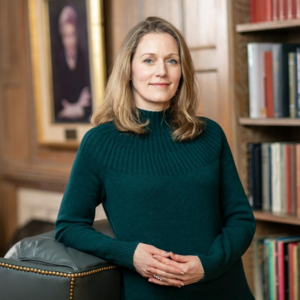


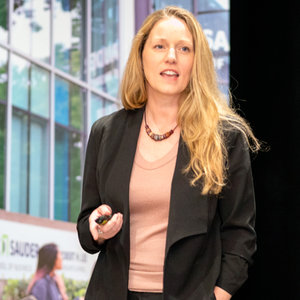
Video Gallery

The Influence Factor
Select video to watch
-
48:35 The Influence Factor
Length: 48:35
-
1:13:39 You Have More Influence Than You Think (The Rational Reminder Podcast)
Length: 1:13:39
-
2:54 You Have More Influence Than You Think (Madefor Interview)
Length: 2:54
-
3:17 You Have More Influence Than You Think (Rotman School of Management)
Length: 3:17
-
57:14 You Have More Influence Than You Think (Nasdaq Entrepreneurial Center)
Length: 57:14
-
58:34 You Have More Influence Than You Think (Cornell University Library)
Length: 58:34
-
9:03 On Our Hidden Potential to Persuade
Length: 9:03
-
59:23 The Science of Influence
Length: 59:23
-
1:11:57 The Science of Persuasion
Length: 1:11:57
-
1:04:50 You Have More Influence Than You Think (The Dissenter Podcast)
Length: 1:04:50
-
37:37 You Have More Influence Than You Think (The Remarkable Leadership Podcast)
Length: 37:37
-
11:59 Show Up and Lead with Confidence
Length: 11:59
-
24:31 You Have More Influence Than You Think (Motivated to Lead Podcast)
Length: 24:31
-
41:38 The Extent of Impact In "You Have More Influence Than You Think"
Length: 41:38
-
15:51 Listen with Presence
Length: 15:51
-
53:07 Influencing Others Positively and Building Relationships Face-to-Face
Length: 53:07
Books:
Journal Articles:
- Bohns, V. K. (2016). (Mis)understanding our influence over others: A review of the underestimation-of-compliance effect. Current Directions in Psychological Science, 25, 119-123.
- Bohns, V. K. & DeVincent, L. (2019). Rejecting unwanted romantic advances is more difficult than suitors realize. Social Psychological and Personality Science.10(8), 1102-1110.
- Bohns, V. K., & Flynn, F. J. (2013). Guilt by design: Structuring organizations to elicit guilt as an affective reaction to failure. Organization Science, 24, 1157-1173.
- Bohns, V. K., & Flynn, F. J. (2010). "Why didn’t you just ask?" Underestimating the discomfort of help-seeking. Journal of Experimental Social Psychology, 46, 402-409.
- Bohns, V. K., & Flynn, F. J. (2013). Underestimating our influence over others at work. Research in Organizational Behavior, 33, 97-112.
- Bohns, V. K., Handgraaf, M. J. J., Sun, J. M., Aaldering, H., Mao, C., & Logg, J. (2011). Are social prediction errors universal? Predicting compliance with a direct request across cultures. Journal of Experimental Social Psychology, 47, 676-680.
- Bohns, V. K., Newark, D. Xu, A. (2016). For a dollar, would you…? How (we think) money influences compliance with our requests. Organizational Behavior and Human Decision Processes, 134, 45-62.
- Bohns, V. K., Roghanizad, M., & Xu, A. (2014). Underestimating our influence over others’ unethical behavior and decisions. Personality and Social Psychology Bulletin, 40, 348-362.
- Deri, S., Stein, D. & Bohns, V. K. (2019). With a little help from my friends (and strangers): Closeness as a moderator of the underestimation-of-compliance effect.Journal of Experimental Social Psychology, 82, 6-15.
- Flynn, F. J., & Lake (Bohns), V. K. B. (2008). If you need help, just ask: Underestimating compliance with direct requests for help. Journal of Personality and Social Psychology, 95, 128-143.
- Newark, D. Bohns, V. K. & Flynn, F. (2017). A helping hand is hard at work: Help-seekers’ underestimation of helper effort. Organizational Behavior & Human Decision Processes, 139, 18-29.
- Newark, D., Flynn, F. J., & Bohns, V. K. (2014). Once bitten, twice shy: The effect of a past refusal on expectations of future compliance. Social Psychological and Personality Science, 5, 218-225.
- Roghanizad, M. M. & Bohns, V. K. (2017). Ask in person: You’re less persuasive than you think over email. Journal of Experimental Social Psychology, 69, 223-226.
- Sommers, R. & Bohns, V. K. (2019). The voluntariness of voluntary consent: Consent searches and the psychology of compliance. Yale Law Journal, Vol. 128 (7), 1962-2033.
- Zhong, C., Bohns, V. K., & Gino, F. (2010). Good lamps are the best police: Darkness increases dishonesty and self-interested behavior. Psychological Science, 21, 311-314.
Other Publications:
- Bohns, V. K. (April 11, 2017). A face-to-face request is 34 times more successful than an email. Harvard Business Review.
- Bohns, V. K. (August 3, 2015). You’re already more persuasive than you think. Harvard Business Review.
- Bohns, V. K., & DeVincent, L. (2018). To reduce sexual misconduct, help people understand how their advances might be received. Harvard Business Review.
- Bohns, V. K., Newark, D. A. & Boothby, E. J. (2018). When do we feel responsible for other people’s behavior and attitudes? S. Thye & E. Lawler (Eds.), Advances in Group Processes (Vol. 35). New York: Emerald.
- Flynn, F. J., & Bohns, V. K. (2012). Underestimating one’s influence in help-seeking. In D. T. Kenrick, N. Goldstein, & S. L. Braver (Eds.), Six degrees of social influence: Science, application, and the psychology of Robert Cialdini (pp. 14-26). New York: Oxford University Press.
Courses Taught:
- Leadership and Influence
- Morality at Work
- Negotiation and Conflict Resolution
- Organizational Behavior
- Psychology of Work
- Research Methods
- Undergraduate Research in Psychology
- Values-Based Leadership
- Writing Persuasively About the Science of Persuasion
Vanessa Bohns
School of Industrial and Labor Relations
Cornell University
394 Ives Hall
Ithaca, New York 14853
United States of America
